
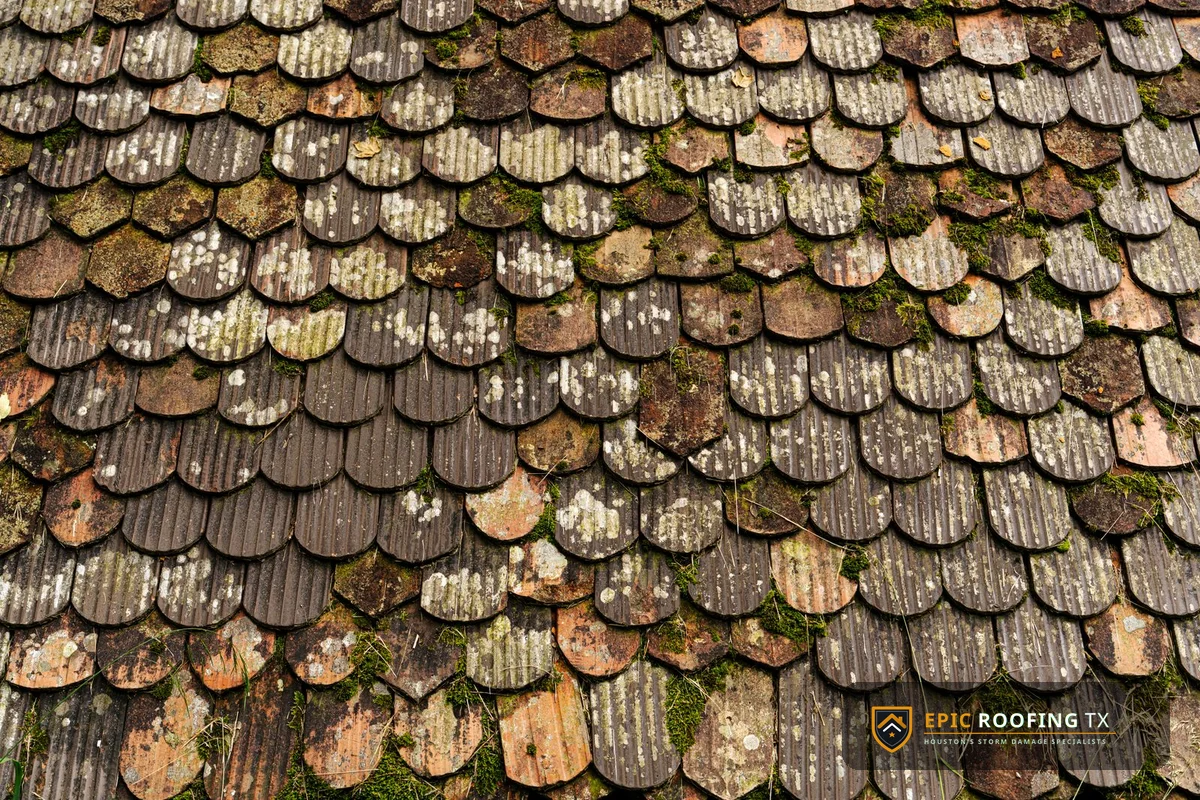
Direct answer: Those black streaks running down your shingles are almost certainly Gloeocapsa magma, a blue-green algae that feeds on the limestone filler in asphalt shingles. It's extremely common in Houston — our humidity, heat, and shaded lots create perfect conditions. It's mostly a cosmetic problem, but left alone for years it can shorten shingle life by holding moisture against the roof. Never pressure-wash it off; a professional soft wash is the safe fix.
If you've noticed dark streaks spreading across your roof — usually starting on the north-facing slopes or under tree shade — you're looking at one of the most common (and most misunderstood) roof issues in Southeast Texas. Let's break down what it is, what it isn't, and what actually works.
What exactly are those black streaks?
Direct answer: The streaks are colonies of Gloeocapsa magma, an airborne algae that lands on roofs and feeds on limestone — a common filler material in asphalt shingles. As colonies grow, they develop a dark protective coating, which is why you see black or dark-brown streaks running vertically down the slope.
A few things it is not:
- Not mold. True mold needs organic food and constant moisture inside the home. Roof algae lives on the shingle surface.
- Not moss (at first). Moss is thicker, green, and root-like — it usually shows up later, in the same damp, shaded spots where algae already grows.
- Not a sign your roof is failing. Algae grows on brand-new roofs too. It says nothing about installation quality.
The streaking pattern — vertical lines following the water's path down the slope — is the giveaway. Algae spreads with rainwater runoff, which is why streaks start at the top of a slope and lengthen downward over time.
Why is it so bad in Houston specifically?
Direct answer: Houston combines everything this algae loves: long humid summers, frequent rain, warm temperatures nearly year-round, and heavy tree cover that keeps sections of roof shaded and damp. North-facing slopes stay damp longest, so streaks almost always appear there first.
A few Houston-specific factors:
- Humidity: Gulf moisture keeps shingle surfaces damp for hours after rain — algae's ideal growing window.
- Shade: Mature oaks and pines in neighborhoods across the metro keep slopes out of direct sun. UV light kills algae; shade protects it.
- Shingle composition: Most Houston homes use asphalt shingles with limestone filler — literally algae food.
- Age: Older roofs have rougher granule surfaces that trap moisture and give algae more grip.
If your neighbors' roofs show the same streaking, that's confirmation — algae spreads roof to roof on wind and rain.
Does roof algae actually damage shingles?
Direct answer: Honest answer: it's primarily cosmetic, but it's not harmless long-term. The main risk is moisture — algae colonies hold water against the shingle surface, and years of that trapped moisture can accelerate granule loss and shorten the roof's service life, especially on roofs already past their prime.
What the evidence actually supports:
- Curb appeal: This is the real, immediate cost. Streaked roofs photograph badly, which matters if you're selling.
- Heat absorption: Dark streaks absorb more heat than clean shingles, marginally raising attic temperatures in Houston summers.
- Moisture retention: Over many years, the damp micro-environment under algae colonies can contribute to premature granule loss.
- What it doesn't do: Algae doesn't eat through shingles, doesn't cause leaks by itself, and doesn't mean you need a replacement.
Bottom line: treat it as a maintenance issue, not an emergency. But don't ignore it for a decade either.
What's the safe way to remove it?
Direct answer: A professional soft wash — a low-pressure application of a diluted sodium hypochlorite (bleach-based) solution, followed by a gentle rinse — is the industry-standard safe method. It kills the algae at the root so streaks don't return in months. Never pressure-wash asphalt shingles.
Why pressure washing is the wrong move:
- High pressure strips the protective granules off shingles — the granules are what block UV and shed water.
- It can force water under shingles, creating the leaks you were trying to prevent.
- Most shingle manufacturers explicitly void warranties for pressure-washed roofs.
A proper soft wash uses garden-hose-level pressure. The cleaning solution does the work, not force. Results are usually visible within days as rain rinses the dead algae away, with full clearing in a few weeks.
What does soft washing cost in Houston?
For a typical single-story Houston home, professional soft-wash roof cleaning generally runs $300–$600; larger or two-story homes run higher. Prices vary with roof size, pitch, and how heavy the growth is. Get the quote in writing and confirm the company uses low-pressure methods — anyone proposing a pressure washer on shingles is someone to avoid.
How do you keep it from coming back?
Direct answer: You can't prevent algae spores from landing — they're in the air everywhere in Houston. But you can make your roof inhospitable: trim back tree branches for sunlight and airflow, keep gutters clean so water doesn't back up onto slopes, and consider zinc or copper strips near the ridge, which release algae-inhibiting metal ions with each rain.
- Trim shade: More direct sun = less algae. This is the single most effective long-term step.
- Clean gutters: Overflowing gutters keep the bottom courses of shingles perpetually damp.
- Metal strips: Zinc or copper strips installed just below the ridge wash ions down the slope with rain. They work best as prevention on a freshly cleaned roof, less well on heavy existing growth.
- Algae-resistant shingles: If you're replacing the roof anyway, ask about shingles with copper-infused granules — they resist algae colonization for years.
When should you call a roofer instead of a cleaner?
Direct answer: Call a roofer (not just a wash company) if the streaked areas also show missing granules, curling or cracked shingles, soft spots, or any interior ceiling stains. Algae plus those signs means the roof may have age or damage issues beyond cosmetics.
A quick ground-level check with binoculars tells you a lot: look for bald patches where granules are gone, shingles lifting at the edges, or dark streaks accompanied by green moss clumps. If the roof is over 15–20 years old and heavily streaked, have it inspected before spending money on cleaning — you want to know the roof's real condition first.
Seeing streaks and not sure whether it's just algae or something more? We inspect Houston roofs honestly — if it's only cosmetic, we'll tell you, and if there's real wear underneath, we'll show you exactly where. Call Epic Roofing at (281) 326-9905.
Frequently Asked Questions
Is the black stuff on my roof dangerous mold?
No. It's algae growing on the outside of your shingles, not mold growing inside your home. It doesn't affect indoor air quality. The confusion is common because both look dark — but roof algae is a surface organism, while problematic mold needs enclosed, consistently damp indoor spaces.
Will the algae go away on its own?
No — it only spreads. Algae colonies grow outward and downward with rain runoff. Without treatment, light streaking becomes heavy coverage over a few seasons, especially on shaded slopes.
Can I clean it myself with bleach?
DIY bleach treatments are risky: the wrong concentration damages shingles and landscaping, and working on a pitched roof is a fall hazard. If you do attempt it, never use a pressure washer. For most Houston homeowners, a professional soft wash is safer and more effective.
Do those zinc strips really work?
They help as prevention, not cure. Metal ions washing down the slope inhibit new algae growth below the strip line. They won't remove existing heavy streaking, and their effective zone is limited to the area directly below the strip.
Does homeowners insurance cover algae removal?
Generally no — insurers treat algae as a maintenance/cosmetic issue, not sudden damage. Don't file a claim for it; it won't be covered and the claim history stays on your record.