
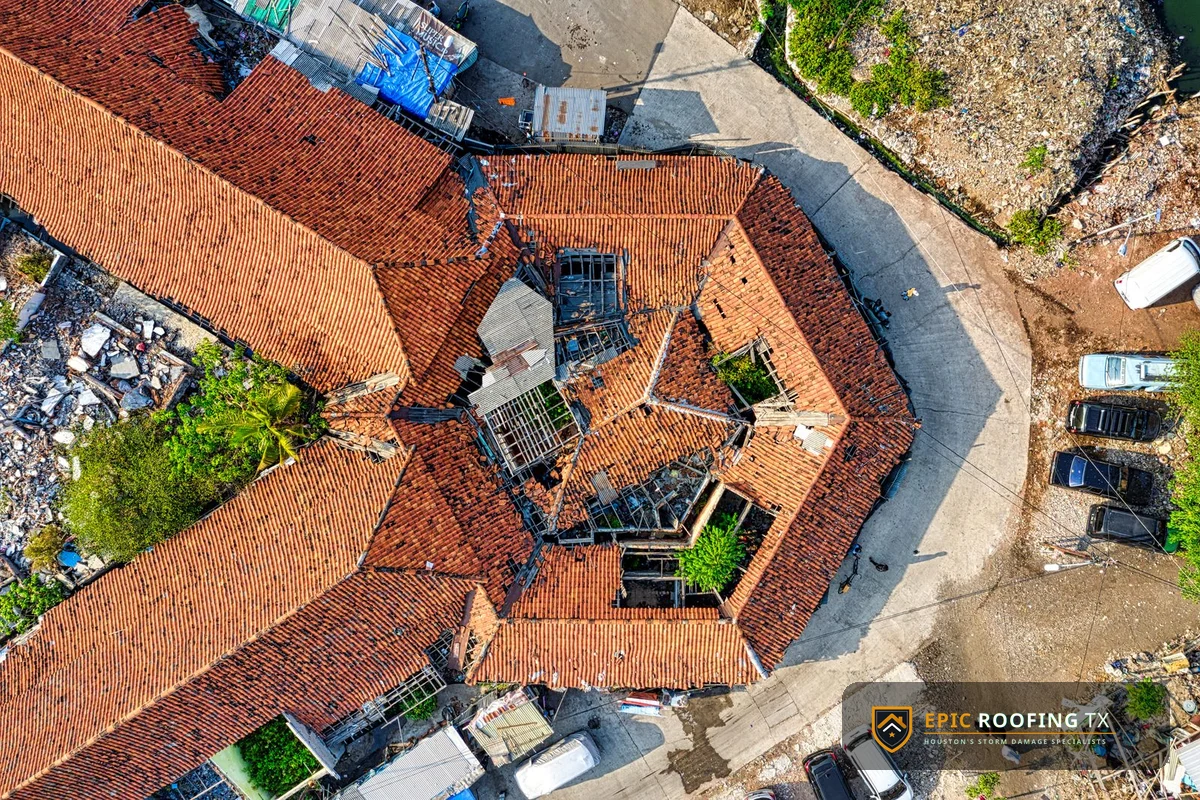
Tuesday night, the storm woke you at 2 a.m. — hail on the windows, branches down by morning. Wednesday you walk the driveway, look up at the roof, and it looks... fine. Here's what keeps me up at night: the worst hidden damage I find starts exactly that way.
A roof can take a beating and show nothing from the ground. Shingles don't have to be missing for the roof to be compromised — they just have to be lifted, bruised, or stripped of the granules that protect them. I've climbed roofs in Pasadena the week after a storm where the homeowner was sure everything was fine, and found seal strips broken across entire slopes. From the driveway, you'd never know. I carry a mental checklist on every post-storm inspection, and the five items below top it almost every time.
Five things I find that homeowners never see from the ground
1. Lifted shingles with broken seal strips
Wind gets under a shingle tab, breaks the adhesive seal, and lays it back down like nothing happened. From below, the roof looks untouched. Up close, that tab will flap in the next storm and let wind-driven rain straight under. I find these by running a hand along the tabs — a sealed shingle resists; a broken one lifts like a page.
2. Granule loss you can only see up close
Hail and wind scour the ceramic granules off shingles, leaving dark, smooth patches where UV protection used to be. From the ground these read as slightly darker shingles. In the gutter, they read as piles of sand-like grit. If your downspouts dumped granules after the storm, your shingles paid for it.
3. Cracked pipe jack boots
The rubber boots around vent pipes dry-rot in Houston heat, and storm flexing finishes them off. A cracked boot is a direct funnel for rain into your attic — and it's a small part sitting 20 feet up where nobody looks. I check every boot on every inspection, because they're the single most common leak source I find.
4. Dented vents, flashing, and chimney caps
Soft metals tell the truth. Dents in turbine vents, lifted flashing around the chimney, a creased chimney cap — these are hail's fingerprints. Damaged flashing doesn't just look bad; it opens the seams water uses to get in. Our flashing and chimney repair work usually starts with exactly this kind of storm finding.
5. Nail pops and shifted ridge caps
Thermal expansion and wind uplift work nails loose over time; a big storm accelerates it. A popped nail pushes a shingle tab up just enough to break the seal — invisible from the ground, obvious from six feet away. Ridge caps take the worst of the wind since they sit at the roof's peak, so I always walk the ridge line first.
How can I tell if my roof has hidden storm damage?
Look for indirect evidence: granules piling up at downspouts, dents on gutters or AC fins, water stains in the attic, and daylight visible through the decking. Then get a professional roof inspection — a roofer walking the slopes can spot lifted seal strips, bruised mats, and cracked boots that are invisible from the ground.
What you see vs. what's really there
| From the ground | Up on the roof |
|---|---|
| Shingles all present | Seal strips broken, tabs lifting in wind |
| Roof looks its age | Granule loss exposing asphalt to UV |
| Gutters look fine | Dents and granule piles signal hail impact |
| No visible holes | Cracked pipe boots funneling water inward |
| Chimney looks solid | Flashing lifted, cap creased by hail |
Why waiting is the expensive option
Hidden damage runs on a clock, and Houston humidity winds it faster. In the first days after a storm, a lifted shingle is just a lifted shingle. Give it a few weeks of rain and you get saturated insulation. Give it a few months and the decking starts to rot — and once decking rots, you're no longer talking about shingles, you're talking about structural repair. I've seen a $400 flashing fix become a $4,000 decking job because a homeowner waited for a visible leak to "confirm" the damage.
Mold is the other clock. Wet insulation in a Houston attic can start growing mold in days, not weeks. By the time you see a ceiling stain, water has usually been traveling inside the roof system for a while — the stain is the symptom, not the start. Every storm season I meet homeowners in Humble who tell me they "meant to get it checked" after the last big wind event. The ones who called early paid for inspections. The ones who waited paid for decking.
Your 48-hour playbook
You don't need to panic. You need a sequence:
- Walk the perimeter. Check gutters, downspouts, and the ground for shingle granules, fallen tabs, or debris. Photograph everything.
- Check the attic. Daylight through the decking, wet insulation, or new stains — note it all with dates.
- Look at your soft metals. Dents on vents, gutters, or the AC unit confirm hail size better than any weather report.
- Get a professional storm inspection. Not a quote — an inspection, with photos, so you know exactly what the storm did before you decide anything.
- If rain is coming and something's exposed, tarp it. Emergency tarping is cheap insurance against the next storm finishing what this one started.
Should I file an insurance claim if I'm not sure the damage is real?
Get the inspection first, then decide. Filing with documented damage — photos, test-square counts, a written report — is straightforward. Filing on a hunch wastes everyone's time and still puts a claim on your record. A professional inspection gives you the evidence either way before you make the call.
Frequently Asked Questions
The storm was two months ago and there's no leak. Am I in the clear?
Not necessarily. Hail bruises and lifted seal strips can take one to three Houston summers to become leaks, as heat cycling works the damaged spots open. If the storm was significant, an inspection now is still worth it — most policies give you up to a year to file, and fresh documentation beats faded memories.
Can I inspect my own roof after a storm?
You can do the ground-level checks — granules, dents, attic stains — and you should. But walking a roof is dangerous, and most homeowners don't know a bruised shingle from a healthy one. A professional inspection catches what untrained eyes miss and produces the documentation an adjuster needs. Do your part from the ground, then hand the ladder work to someone who does it daily.
What does hidden storm damage do to my insurance options?
Nothing, as long as you document it before filing. Adjusters expect storm damage to be non-obvious — that's why they do test squares and chalk counts. What hurts claims is waiting: file within the policy window, bring your photos and inspection report, and remember that most homeowners pay only their insurance deductible. Never let anyone waive it — that's illegal in Texas under House Bill 2102.
My neighbor's roof was totaled but mine looks fine. Is that possible?
Absolutely. Hail damage varies wildly house to house — shingle age, roof slope direction, tree cover, and even the shingle brand change how impact energy lands. Your neighbor's 18-year-old roof and your 8-year-old roof can take the same storm and come out completely differently. Judge your roof on its own inspection, not the street's.