
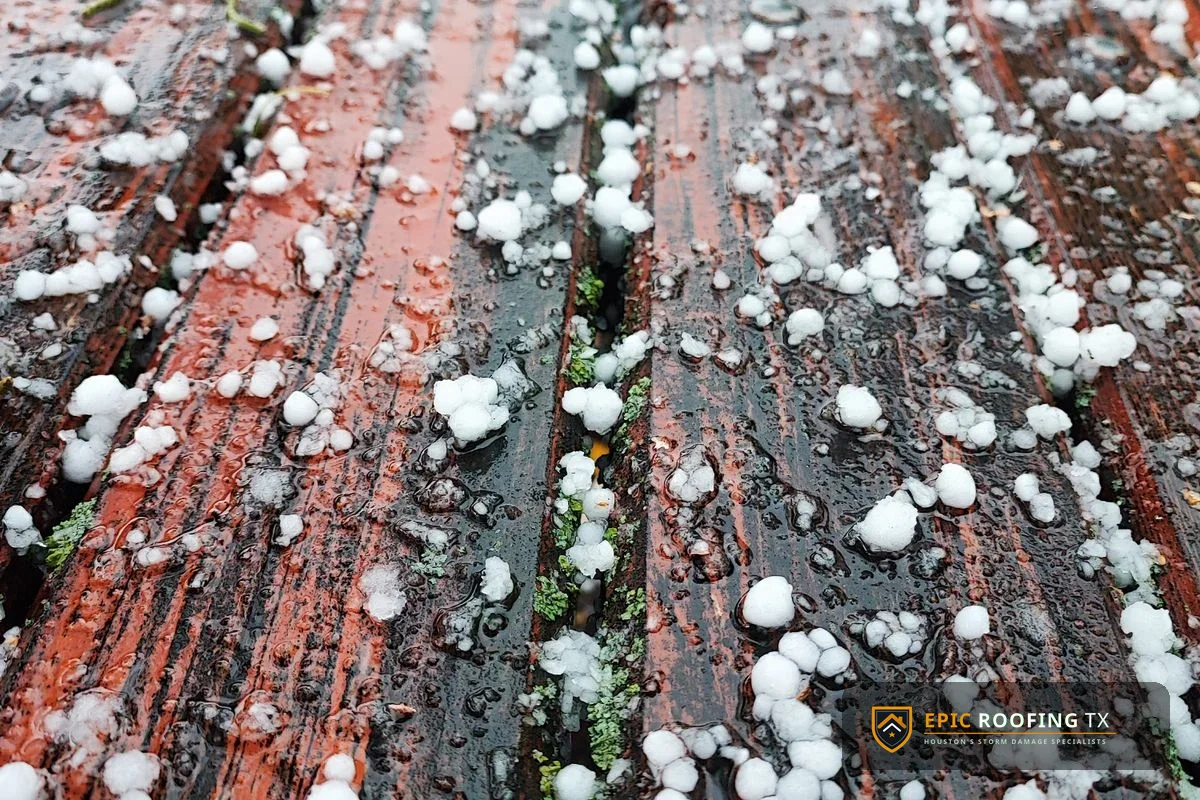
Direct Answer: What Should I Do in the First 48 Hours After Hail Hits My Houston Roof?
Stay on the ground, stay safe, and start documenting. Check for dented gutters and downspouts, bent air-conditioner fins, torn window screens, and piles of shingle granules where the downspouts empty. Photograph everything, note the storm's date and time, and call a local roofer for a free inspection before you call your insurer.
In Houston, hail season is not a matter of if but when. Warm, humid Gulf air feeds spring and summer storms, and when the ice starts falling it can hammer a roof in minutes. Most homeowners come out the next morning, look up at a roof that seems fine, and assume the worst is over. That is the moment that matters most: the first 48 hours decide whether a small wound turns into a leak, and whether your claim has the evidence it needs.
This guide walks you through those 48 hours: the safe ground-level check, the signs the roof took a real hit, the photos and paperwork that protect a claim, and how to decide between a repair, a claim, or a replacement. If the storm was rough, that is what hail damage roof repair in Houston is for — an inspection first, and a plan second. One rule runs through everything below: do not climb on your roof. A hail-damaged roof is slick, and loose granules act like gravel underfoot.
Hours 0–2: Safety and a First Look From the Ground
The first two hours are about safety, not shingles. Hail can pull down tree limbs and leave gutters hanging by a fastener, so stay clear of any power lines that look low or damaged, and keep children and pets inside until you have walked the yard.
What to Look For Without Climbing: Dented Gutters, Downspouts, AC Fins, Window Screens
Start with the soft metals, because they keep the clearest record of a hailstorm. Aluminum gutters and downspouts dent easily: small, round dings of roughly the same size, scattered across the surface, point to hail, while a single large dent usually means something bumped the gutter. Check every gutter run and downspout, including the elbows and end caps.
Next, look at the air-conditioner condenser outside. Its thin aluminum fins dent under hail, and a peppered surface of small, even dents means the storm hit hard enough to reach the roof too. Check window screens for small tears, and window frames and door trim for chipped paint and tiny round marks.
The Granule Test: Handfuls of Granules at the Downspout Exits
Asphalt shingles are coated in small mineral granules that shield the asphalt underneath from sun and rain. A hailstone knocks those granules loose, and the next rain washes them down the slope and out at the downspout exits — which makes the ground below each downspout a useful inspection spot.
Crouch at each downspout exit and look at what has collected there. A few granules are normal, but a thick layer of dark, sand-like material — a pile you can scoop up by the handful — when there was little there before the storm, is a warning sign. Scoop a small amount into a bag for your storm paperwork.

Why Hail Damage Hides Until the Next Storm
The most frustrating thing about hail damage is how normal a damaged roof can look — until weeks later, after the next heavy rain, a brown stain spreads across a bedroom ceiling. The roof was hurt on the night of the storm; it simply did not show it yet.
Bruised Shingles and Fractured Mats
An asphalt shingle is a fiberglass mat soaked in asphalt, coated with mineral granules. A hailstone can knock the granules away, leaving a dark round patch of exposed asphalt; compress the mat underneath, leaving a soft spot — a bruise you can feel with your hand; and, on a hard hit, fracture the mat itself, a break you may not see from above.
The bruise is the one that catches homeowners out. A bruised shingle can look almost untouched from the ground, yet the mat beneath is cracked. It still sheds water today — but its strength at that spot is gone. Telling this apart from ordinary aging matters: our guide to hail damage vs normal wear walks through the differences. Random round hits scattered across a slope point to hail, while even wear along the same edge of many shingles usually points to age.
Why the Leak Shows Up Weeks Later, Not the Same Day
A bruised shingle does not leak on day one, because the layers below it are still doing their job, and a bruise is not a hole. The leak arrives later: sunlight dries and hardens the exposed asphalt, heat and cold flex the weakened mat, and the fracture widens with each cycle. Then a heavy Houston rain arrives, water finds the weakened spot and travels along the decking until it finds a seam to drip through. That is why the stain often appears far from the damage.
⛈️ Storm Just Passed Over Your Houston Home? A free inspection checks every slope, marks the hits, and gives you a photo report for your claim.
Book it here: free roof inspection → or call (281) 326-9905.
Documenting the Damage for an Insurance Claim
Whether you file a claim or pay for a repair yourself, the documentation you create in the first 48 hours is the most valuable thing you own after a hailstorm. Memories fade, hail melts, and gutters get repaired — but dated photos and written notes stay exactly as they were. Adjusters work from evidence, and an organized file gets a faster, fairer look. Start the file the same day.
The Photo List Adjusters Actually Use
Photograph widely first, then closely. Start with one wide shot of each side of the house from the street, then move in to the damage: every dented gutter and downspout, every torn screen, and the bent air-conditioner fins. Then photograph the granules at each downspout exit, and any hailstones still on the ground next to a coin for scale.
For each close-up, take two photos: one from a step back that shows where on the house the damage is, and one close in that shows the damage itself. Shoot in daylight, keep your phone's date and location stamps on, and do not clean anything up first. Our checklist, what to photograph after a hailstorm, covers the full shot list slope by slope. Also photograph the inside: attic daylight through the decking, wet insulation, and any ceiling stains, with the room and date noted.

Dates, Storm Reports and Keeping Your Paperwork in One File
Write down the storm's date and time while you still remember it, and which side of the house got hit hardest. Then save the public record: the National Weather Service publishes storm reports for Harris County, and local news usually carries the hail size reported in your part of town. Keep every receipt that follows the storm, and if a roofer inspects the roof, keep the written report and its photos. If you speak to your insurer, write down the date, who you spoke to, and what was agreed. One file, one timeline, everything dated.
Repair, Claim, or Replace: Deciding the Right Order
Once the ground check and the photos are done, the question is what to do next — and in what order. The rule is simple: inspect first, protect second, decide third. The inspection tells you what you are dealing with; temporary protection keeps the next rain out; and the repair-versus-claim decision comes last.
That order is also what roof insurance claims are built around. A claim is a request to pay for damage that has been documented, not a guess about what might be wrong. The inspection report and your first-48-hours photos are what turn a phone call to your insurer into a claim with a foundation.
When to Call the Roofer Before the Insurer
Call the roofer first. It sounds backwards — the insurer pays, so why not call them first? — but the roofer is the one who can tell you whether you even have a claim worth filing. A roofer climbs the roof, marks the hits, counts the damage slope by slope, and gives you a written report with photos, which tells you whether a repair will fix it or the damage justifies a claim.
There is a second reason to lead with the roofer: a claim stays on your record whether it is approved or not, and filing for minor damage a repair would have handled can cost you more than the repair itself. A roofer who knows Houston storm claims can give you an honest read — repair it, or document it and file. If the damage does justify a claim, the same roofer can meet the adjuster on the roof and walk them through the marked hits, which is where a roof insurance claim specialist earns their keep.
Temporary Protection: Tarping Before the Next Rain
If the inspection finds an open wound in the roof — a puncture, a torn shingle, a cracked vent boot — do not wait for the claim paperwork to catch up. Houston weather does not wait for adjusters, and the next thunderstorm can turn a small opening into soaked insulation and stained ceilings. The answer is emergency tarping: a properly secured tarp over the damaged area, installed by someone with the safety equipment to work on a wet slope, to keep water out until the permanent repair is done.
A tarp is a stopgap, not a fix — it buys you dry days, not dry months. It also protects the claim, because insurers expect homeowners to take reasonable steps to stop further damage. So if the roofer says the roof needs cover tonight, get it covered tonight and keep the receipt. Repair versus replace comes down to extent and age: scattered hits on a younger roof usually mean a repair, while widespread bruising across several slopes usually means replacement.
Frequently Asked Questions About Hail Damage in Houston
How soon after a hailstorm should I have my roof inspected?
Within the first 48 hours if you can. The signs are freshest then, and a roofer can mark and photograph the damage before sun and rain blur it.
Can hail damage a roof without leaving visible marks?
Yes — it is the most common kind of hail damage on Houston shingle roofs. A hailstone can bruise a shingle and fracture the mat underneath while leaving the surface looking almost untouched from the ground. You need to be on the roof, feeling the shingles by hand, to find it.
Will my insurance cover hail damage to my roof in Houston?
It depends on your policy. Most standard Texas homeowners policies treat sudden storm damage, including hail, as a covered cause of loss — but the details vary, including your deductible and whether the policy pays replacement cost or actual cash value. Read your policy or ask your agent before you file.
Should I file a claim before or after a roofer looks at the roof?
After. Have a local roofer inspect the roof first, mark the hits, and give you a written report with photos — it tells you whether the damage is minor enough for a repair or serious enough to justify a claim.
How do I know if my roof needs repair or replacement after hail?
It comes down to how widespread the damage is and how old the roof is. Scattered bruised shingles on a younger roof can usually be repaired; widespread hits across several slopes usually point to replacement. Ask for both assessments in writing.
Talk to a Houston Hail Damage Specialist
The first 48 hours after a hailstorm are the hours that count. Walk the yard, photograph everything, save the granules and the storm reports, and get a roofer on the roof before the next rain arrives. Epic Roofing & Construction offers a free hail-damage inspection across Greater Houston: every slope checked, every hit marked, and a photo report for your claim.
📞 Call (281) 326-9905 — Free Hail-Damage Inspection
Or book your free hail-damage inspection → and get your roof checked before the next Houston storm.