
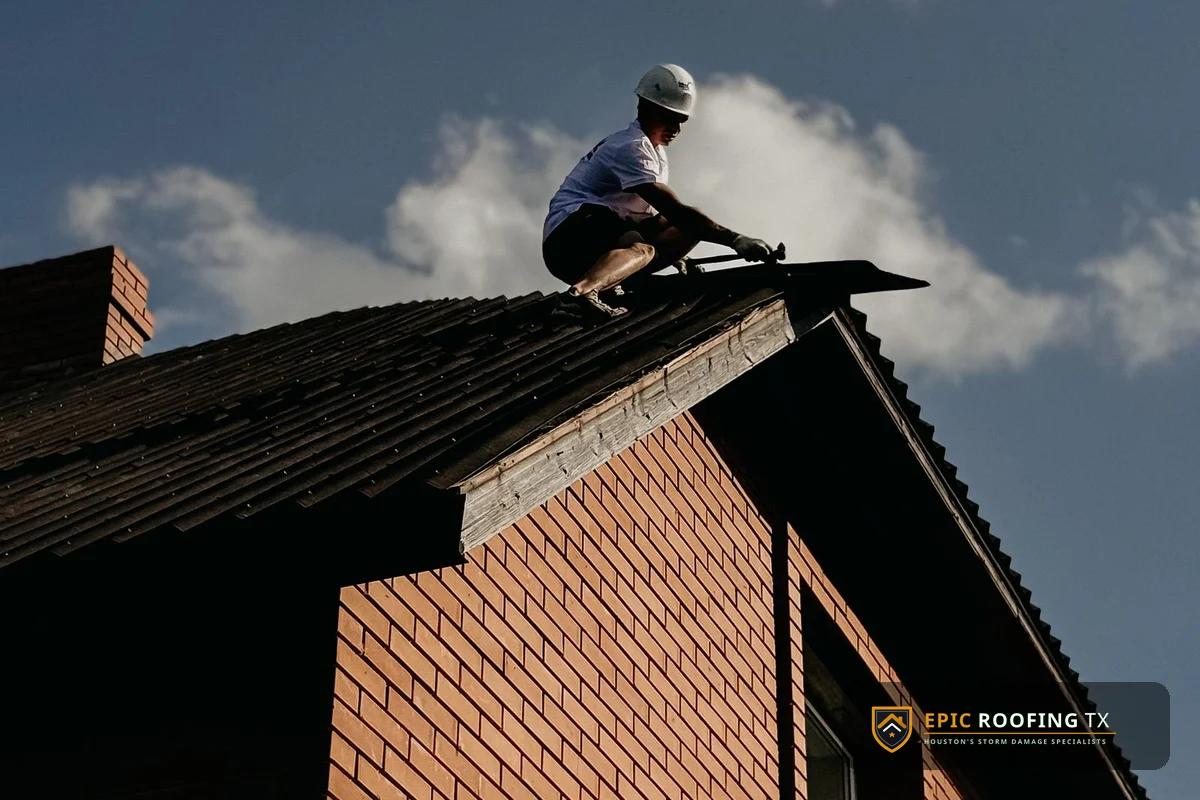
Direct Answer: What Roof Problems Do Pasadena Homes Call About Most?
The three repairs Pasadena homeowners call about most are leaks around vents, pipe boots and flashing, wind-lifted shingles after Gulf storms, and aging three-tab roofs reaching the end of their service life. Most leaks start small and show up inside as a ceiling stain far from the actual hole, so the fix starts with a roof-level inspection that traces the water back to its entry point — not with patching the stain on the ceiling.
Pasadena sits between Houston and the coast, and its roofs feel that in-between position every year. The city sits close to the Houston Ship Channel, so humid Gulf air hangs over its neighborhoods long after the rain stops, and summer storms roll in off the bay with wind-driven rain. Much of the housing stock is older ranch homes — low, wide, single-story houses built when three-tab shingles were the standard. For the wider picture, start with our full Pasadena roofing guide, and if you already know you need hands on the roof, a roofing contractor in Pasadena, TX who works these streets every week will recognize your roof's problems on the first walkaround.
The Roof Problems Pasadena Homes Call About Most
Ask any roofer who works Pasadena regularly and the list is short: ordinary Gulf Coast wear, repeated house after house.
Leaks around vents, pipe boots and flashing
The single most common Pasadena leak does not start in the middle of a shingle field. It starts where something pokes through the roof. Every vent needs a flashing or a boot to seal the hole it passes through, and those seals age faster than the shingles around them. The rubber collar on a pipe boot — the flexible ring that hugs the vent pipe — dries out and cracks in Texas heat, often years before the shingles around it look worn. Once that collar splits, rain runs straight down the pipe and into the attic, and the first sign inside is usually a stain on a bathroom or hallway ceiling below the vent.

Wind-lifted shingles after Gulf storms
Pasadena catches the wind off Galveston Bay, and the storms that roll up the Ship Channel do not need to be hurricanes to lift shingles. A strong Gulf thunderstorm pushes rain sideways under shingle tabs and pries at the sealant strips that hold them down. Once a tab lifts and the seal breaks, the next gust creases it, and the crease becomes a permanent weak point even if the shingle settles back down.
Aging 3-tab roofs reaching the end of their life
Three-tab shingles were the standard on Pasadena ranch homes for decades, and they did honest work. But they are thinner and lighter than the architectural shingles used today, and in Gulf heat their service life is shorter than the number on the wrapper suggests. A three-tab roof in Pasadena often reaches the end of its useful life after fifteen to twenty years of sun, humidity, and storm seasons — not in one dramatic failure, but in a slow accumulation of small ones.
What to Check After a Gulf Storm Rolls Through
The first dry day after a storm is the best time to look at your roof, because the damage is fresh and the evidence has not been washed away by the next rain.
Ground-level checks any homeowner can do safely
Stay on the ground. Everything you need to see after a storm can be seen from the yard with a pair of binoculars and a slow walk around the house. Look for shingles on the ground or in the gutters, and for tabs along the eaves and ridges that sit crooked or lifted. Check the gutters: granules in a downspout mean the roof is shedding its protective surface.
Attic signs: stains, daylight, damp insulation
The attic tells the truth about a roof in a way the outside cannot, because it shows you where the water actually went. On a dry day, take a flashlight into the attic and look along the underside of the decking, not just at the floor. Dark stains on the wood and damp spots on the insulation are signs water has been getting in, even if the ceiling below still looks clean. Look for daylight: any pinprick of light coming through the deck means there is a hole the same size, and water will use it the same way light does.
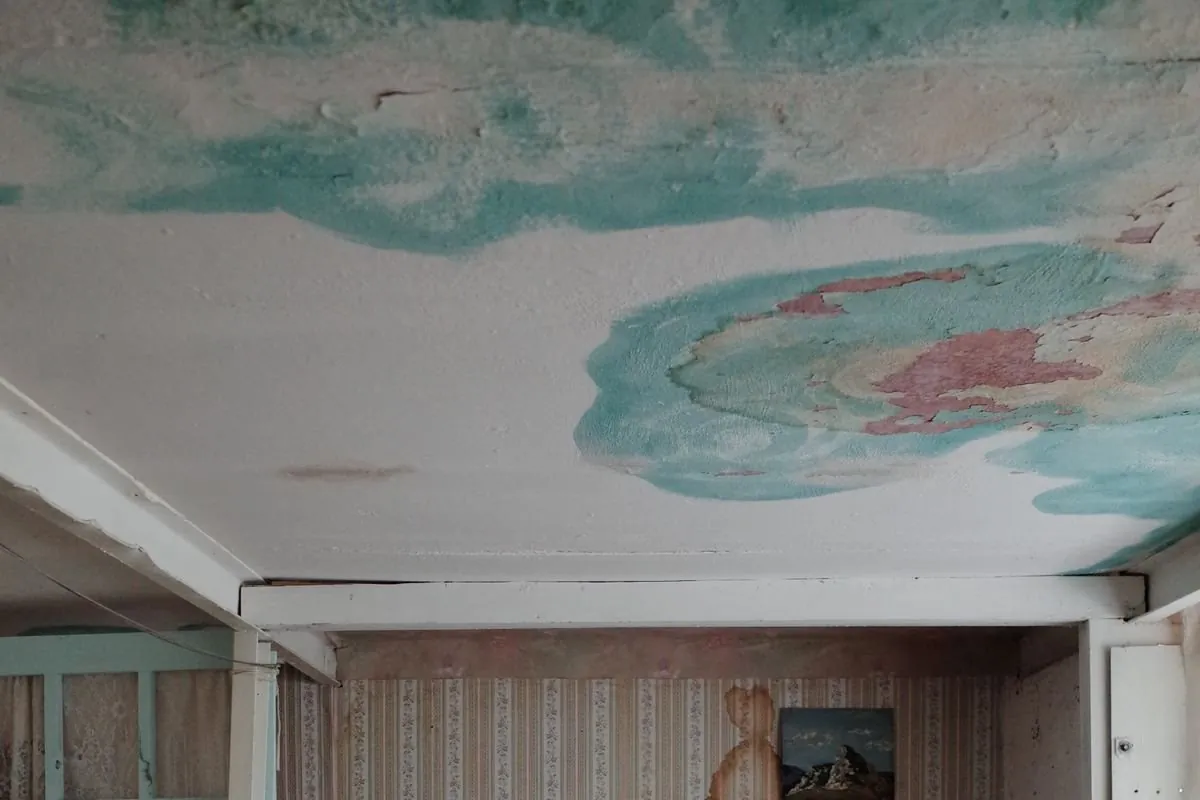
When a "small" stain is actually decking rot
A small brown ring on the ceiling looks minor, and most of the time it is the visible end of a small problem. But sometimes it is the visible end of a problem that has been running for months, and the difference is in the decking. Wood decking that stays damp rots from the inside out: it softens, it sags between rafters, and eventually it will not hold a nail. When the decking is involved, the job becomes a section of rotting roof decking to cut out and rebuild, not a shingle swap — and it cannot be priced honestly until someone has opened the roof and seen how far the rot has spread.
Leak Repair vs Full Replacement in Older Pasadena Homes
This is the question almost every Pasadena homeowner with an older roof eventually faces. A repair and a replacement are not two versions of the same job.
The repair math: isolated damage vs system-wide wear
The math is simple once you separate the two cases. If the roof is mostly sound and the damage is isolated — one failed boot, one lifted section after one storm, one flashing that has given up — a repair is the right money. If the damage is system-wide — granule loss across whole slopes, brittle shingles that crack when lifted, soft decking in more than one place, leaks in several rooms — then each repair is working against a roof that is wearing out everywhere at once, and the repairs will keep coming closer together.
The way to tell which case you are in is a full-roof inspection that looks at the whole surface, not just the leak, and names what is worn and what is still sound, slope by slope.
Matching old shingles — honest expectations
One thing to know before any repair on an older roof: the new shingles will not match the old ones perfectly, and anyone who promises an invisible patch is not being straight with you. Shingles fade in the Texas sun, and a shingle made today comes from a different production run than one made fifteen years ago, even in the same color name. On a three-tab roof that has weathered for years, a fresh bundle stands out — cleaner, darker, flatter — and the difference is visible from the street for a while.
How Fast a Pasadena Roof Repair Should Happen
Speed matters with a roof leak, but it matters in the right order. The second job is the permanent repair, and that one waits for dry weather, because sealant and shingles do not bond on a wet surface and a repair made in the rain is a repair made twice.
In practice, a leak that is actively dripping should be looked at the same day it is found, even if all that happens that day is a tarp and a plan. A stain that is dry and not growing can wait for the next dry day, but not for the next month. If the roof has an open hole from storm damage, emergency roof tarping is the right call the same day, and a properly secured tarp can hold through weeks of weather while the permanent repair is scheduled.
🏠 Roof Leaking in Pasadena? Get a free inspection first — we trace the leak to its source, photograph what we find, and give you a written repair scope before any work starts.
Call (281) 326-9905 or see what the free inspection covers →
Frequently Asked Questions About Roof Repair in Pasadena
How much does roof repair cost in Pasadena, TX?
It depends on the size of the repair, where the leak starts, and whether the decking underneath is still sound. A single pipe boot is a very different job from a valley rebuild or a section of soft decking. That is why the honest sequence is inspection first, then a written, line-item scope that names the repair and the area it covers.
How do I know if my Pasadena roof needs a repair or a full replacement?
Look at the pattern, not one spot. One leak at one vent, a few lifted shingles after one storm, or one worn flashing is usually a repair. Leaks in several rooms, shingles losing granules across whole slopes, brittle tabs that crack when lifted, and decking that feels soft in more than one place point to a roof that is wearing out as a system.
Can a roof leak be repaired while it is raining?
The leak can be controlled in the rain, but a lasting repair cannot be made on a wet roof. In wet weather the right move is a tarp and interior protection to stop the water coming in, then the permanent repair once the roof surface is dry enough for sealant and shingles to bond.
How long does a typical roof repair take in Pasadena?
Most small repairs — a pipe boot, a flashing section, a handful of shingles — are finished the same day once the roof is dry and the crew is on site. Repairs that involve cutting out and replacing decking, rebuilding a valley, or chasing a leak that shows up far from its source take longer, because the crew has to open the roof and put it back together in layers.
Will my homeowner's insurance cover storm damage to my roof in Pasadena?
It depends on your policy and on what caused the damage. Sudden storm damage — wind-lifted shingles, a fallen limb, hail strikes — is the kind of loss policies are usually written to cover, while slow wear, age, and long-ignored leaks are usually not. What helps any claim is dated photos of the damage and a written inspection report that describes what the storm did and where.
Need Roof Repair in Pasadena? Talk to Epic Roofing TX
Pasadena roofs fail in patterns, and once you know the patterns you can read your own roof with clear eyes: the boot that has cracked, the tab that has lifted, the three-tab slope that has given fifteen good years and is ready for a decision.
Epic Roofing & Construction works Pasadena roofs every week, from the older ranch homes near the Ship Channel to the newer streets on the city's edges. Every job starts the same way: a free roof inspection in Pasadena with photos of what is wrong and a written scope that names the repair before any work starts.
📞 Call (281) 326-9905 — Free Pasadena Roof Inspection
Or read the wider guide first: Our Full Pasadena Roofing Guide →